

In one of my last reflections, I wrote about why I chose to organize around the Mediterranean, the quiet frustration of seeing this living ecosystem broken into political pieces, and the call to remember a deeper geography of kinship and care. I also wrote about the first pilgrimage I hosted last winter, to the edge of the great Sahara, which taught us that belonging to a place is not an idea to be understood, but a relationship to be cultivated.
Guided and supported again by the Design School for Regenerating Earth, and building on the learning journeys “How to Organize Your Bioregion” and “Regenerating Earth Through Collapse,” I found myself preparing for a second pilgrimage, followed by a Mediterranean Bioregional Activation event.
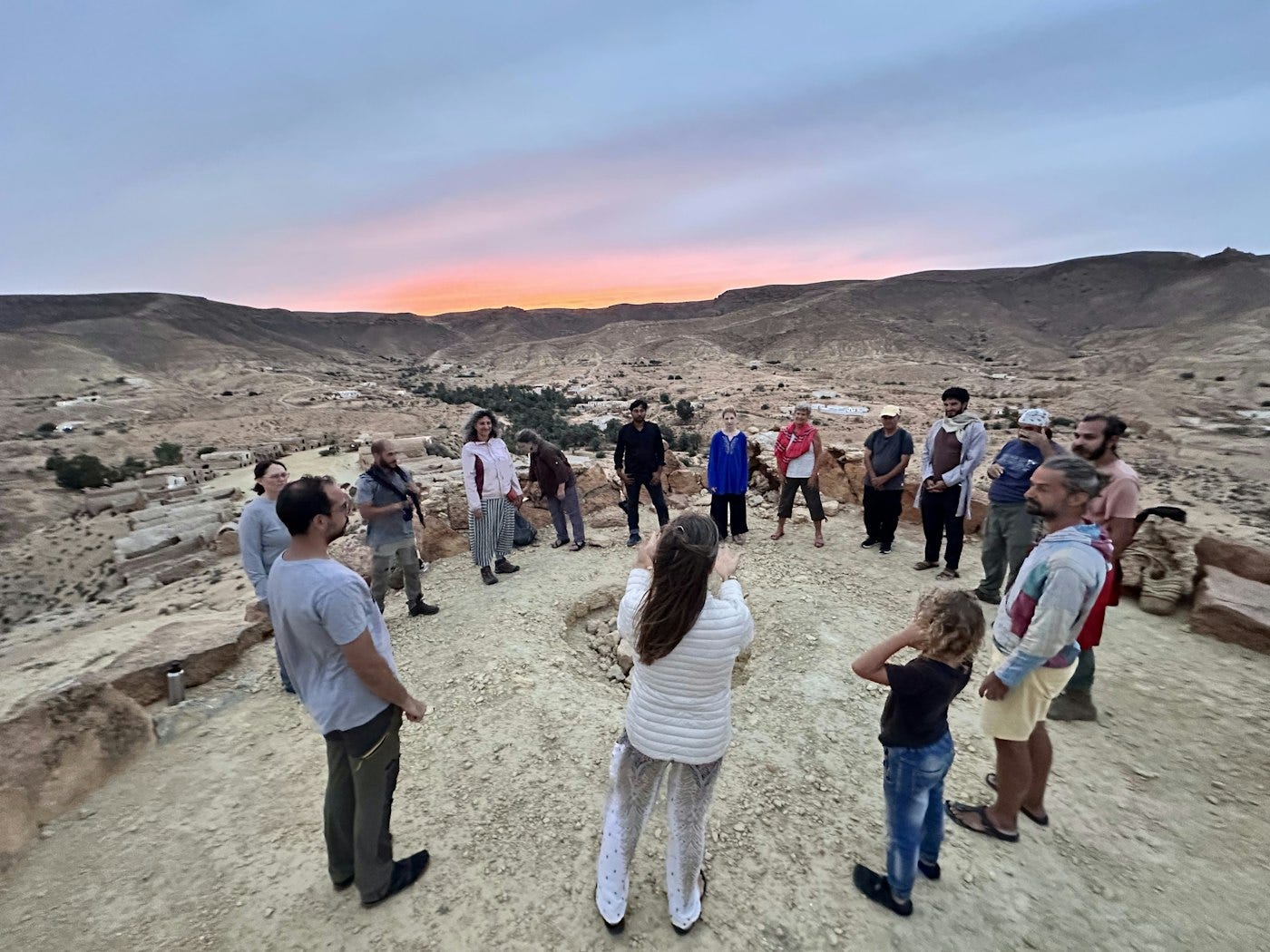
Twenty Earth Regenerators gathered on September 18, 2026, from different parts of the world. Some had walked this path before; most were new. What united us was a shared intention: to listen, to connect, and to weave. My role as local organizer was to provide the space for that.
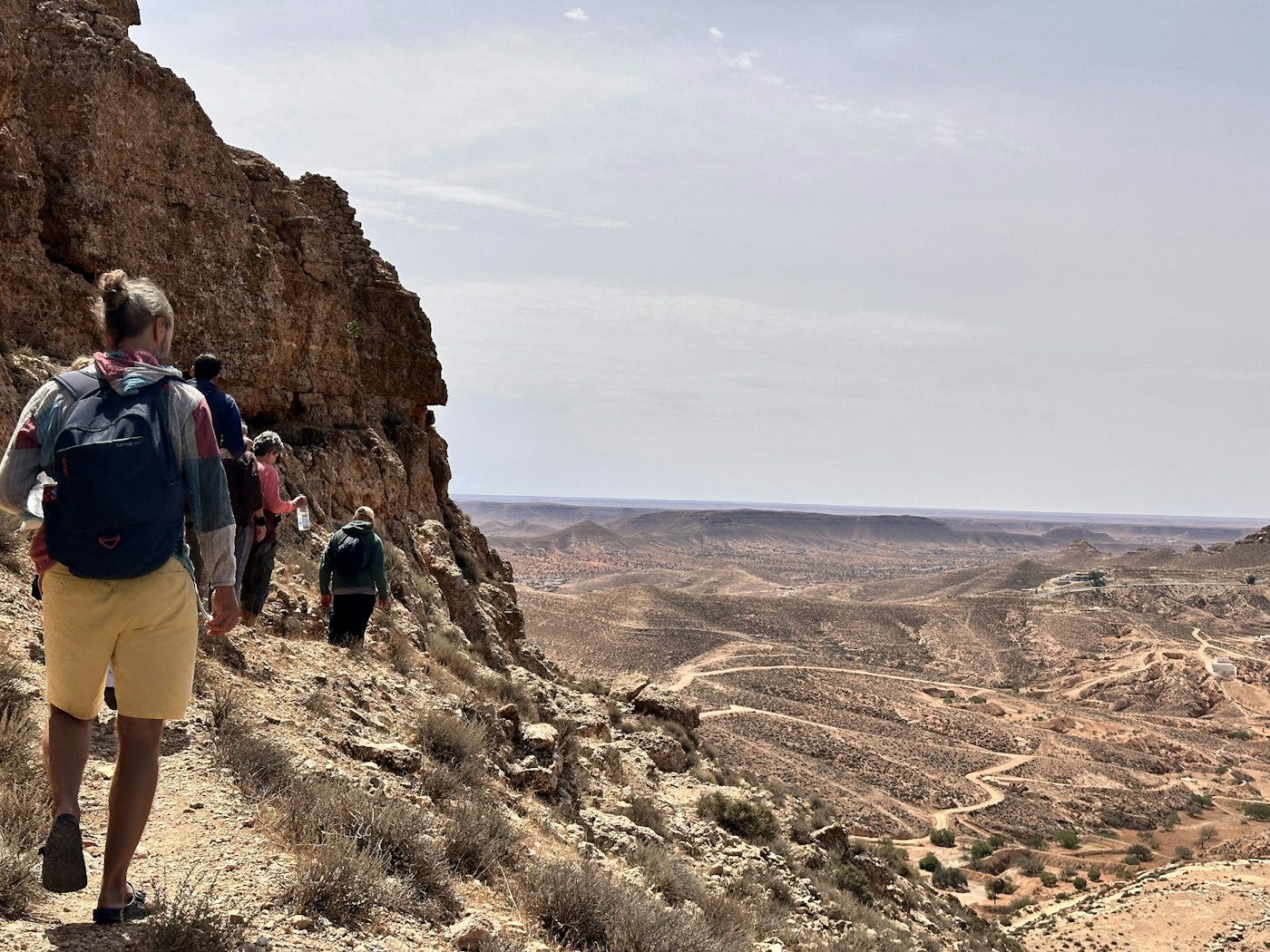
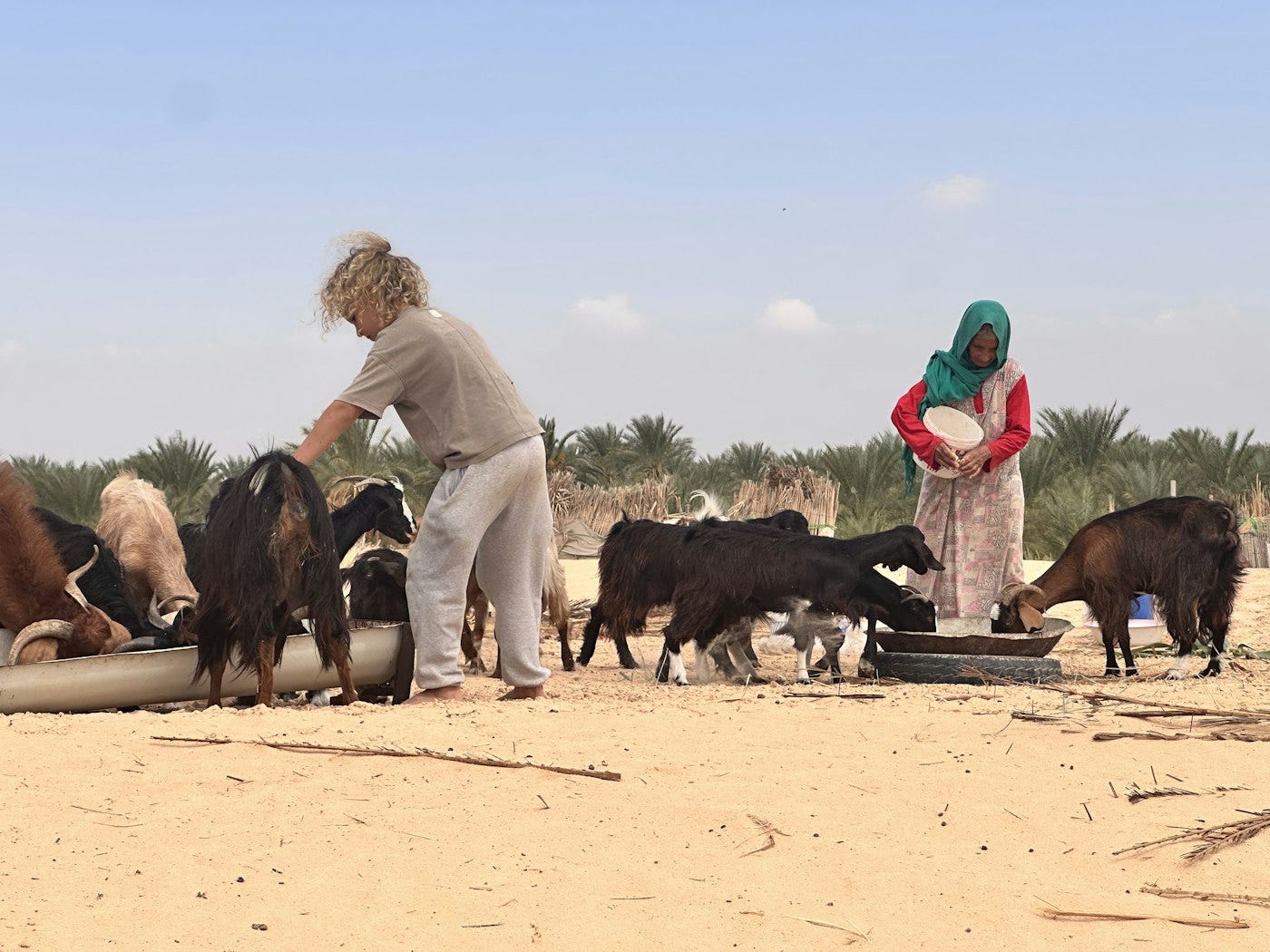
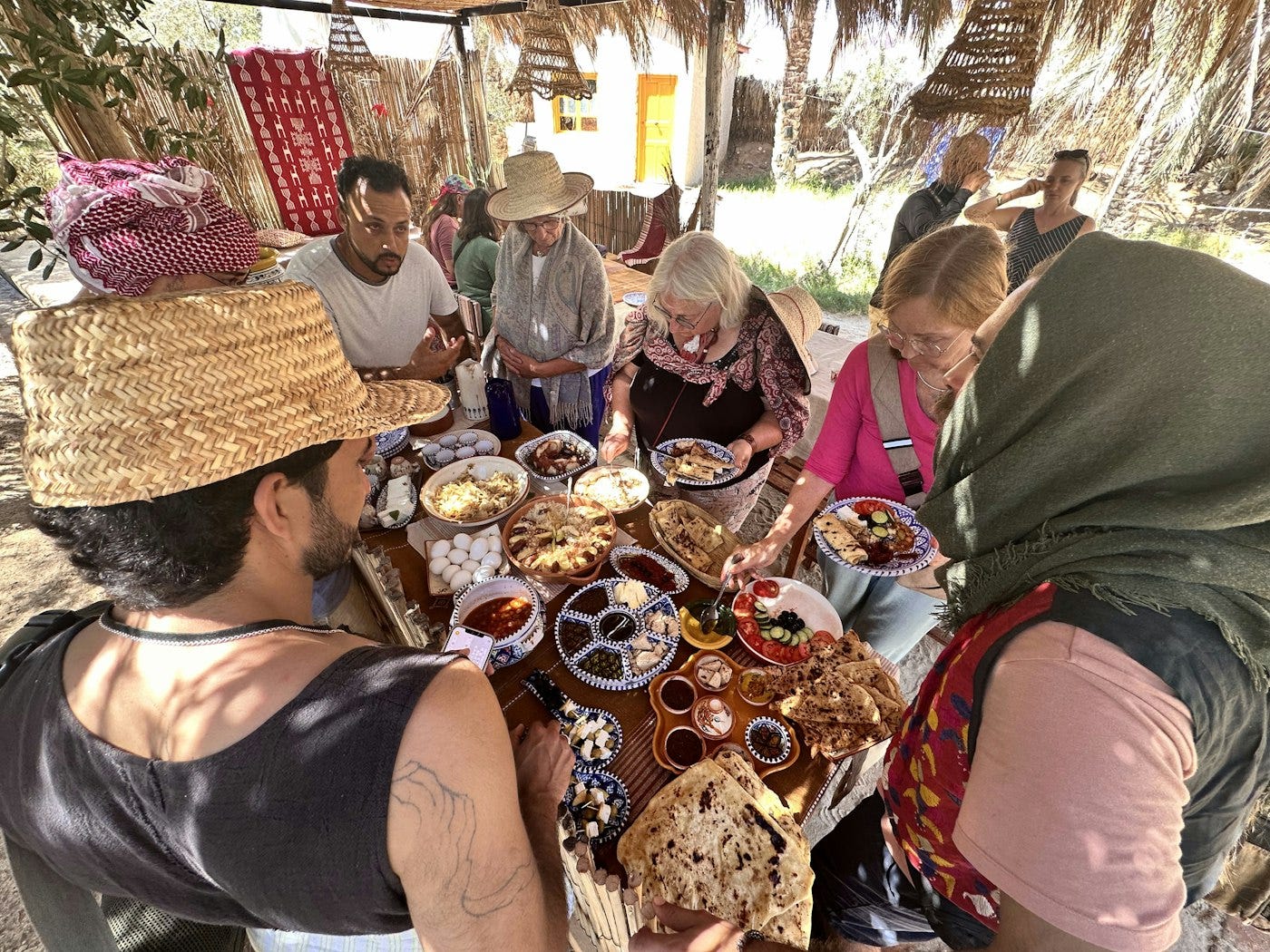
We began in the Daher mountains, in the ancient village of Zammour. For two nights, we lived in rooms dug into the rocky mountainside, hosted by local families and immersed in the slow and meaningful life they inherited from their ancestors.
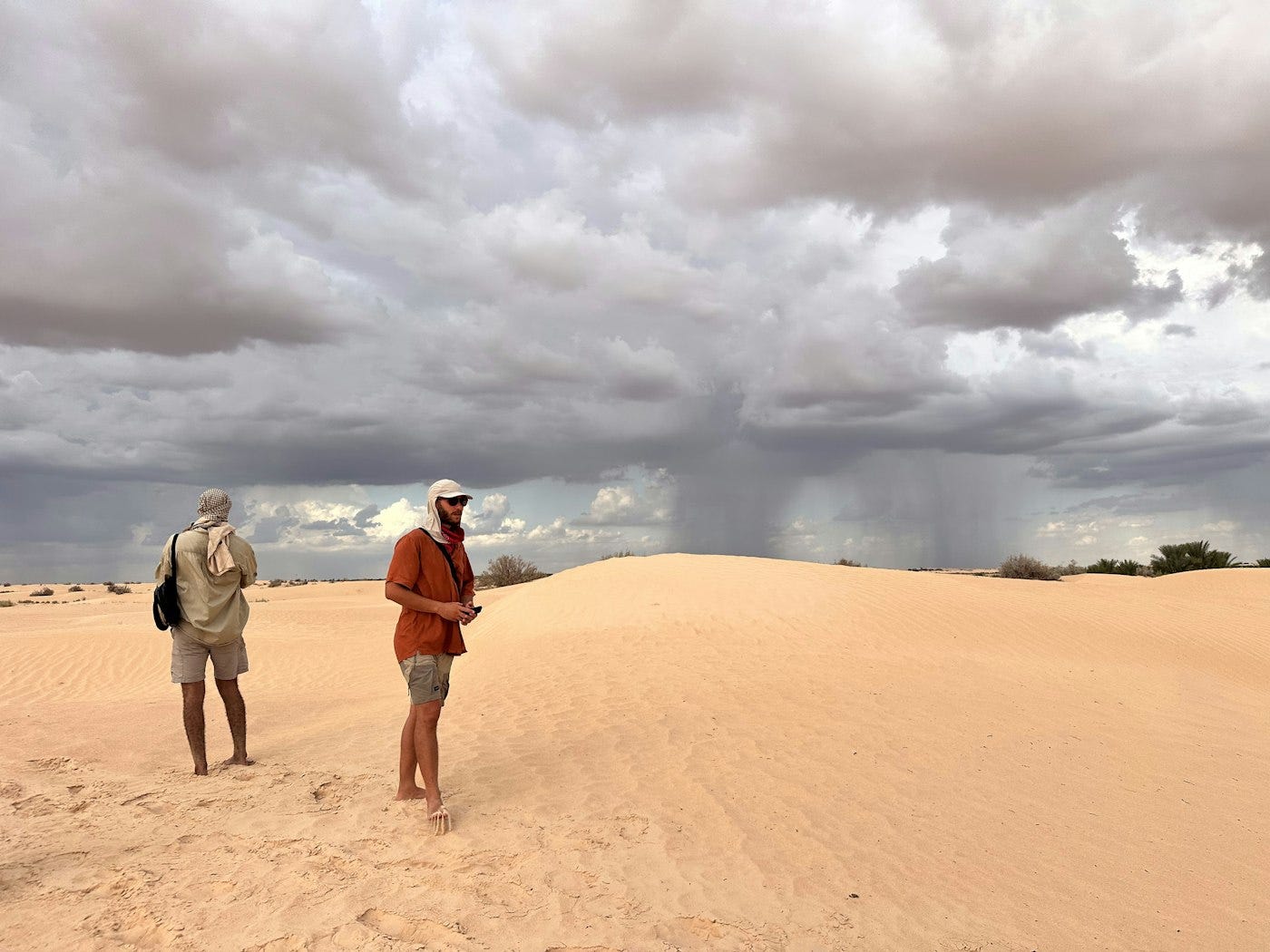
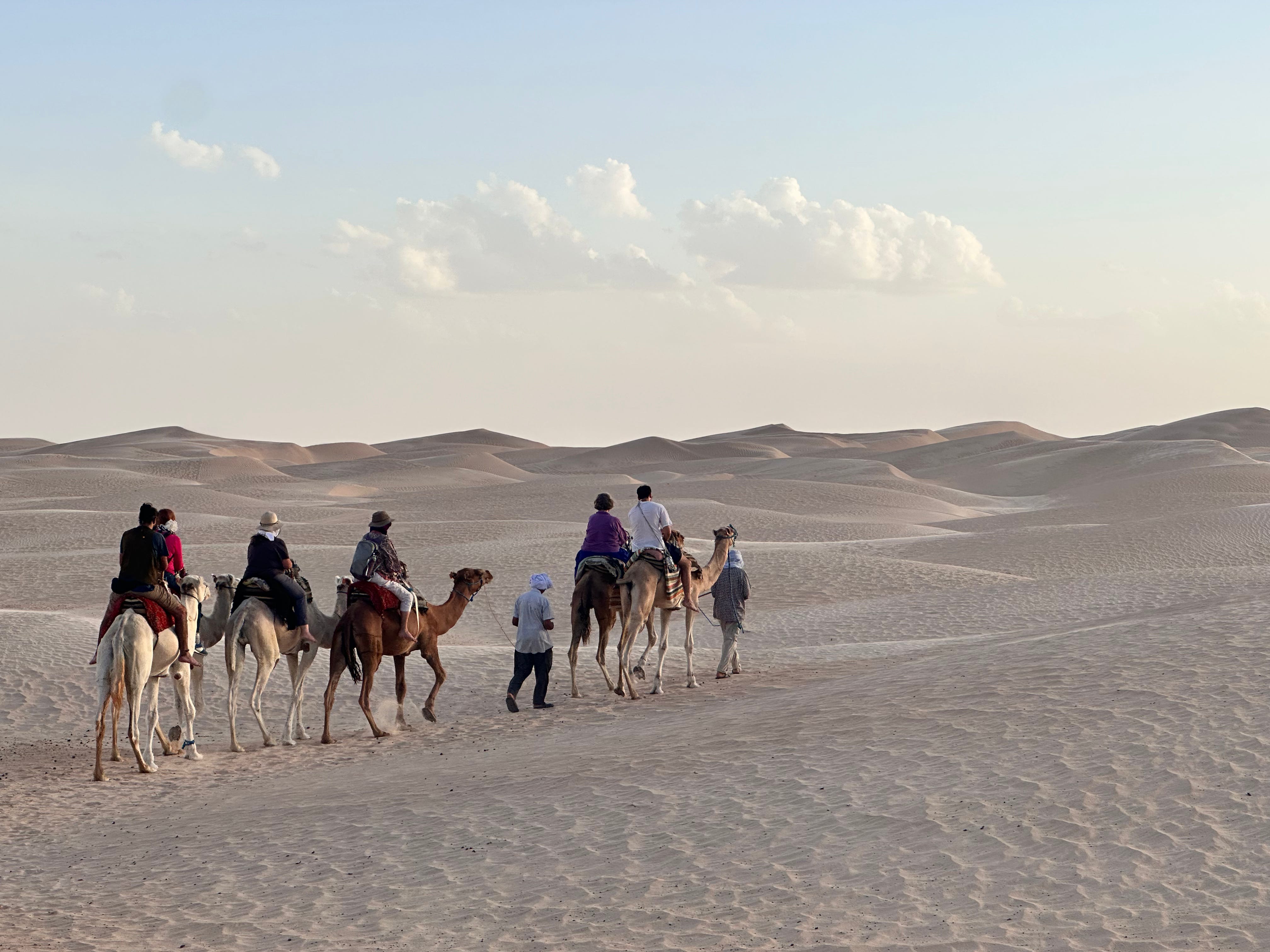
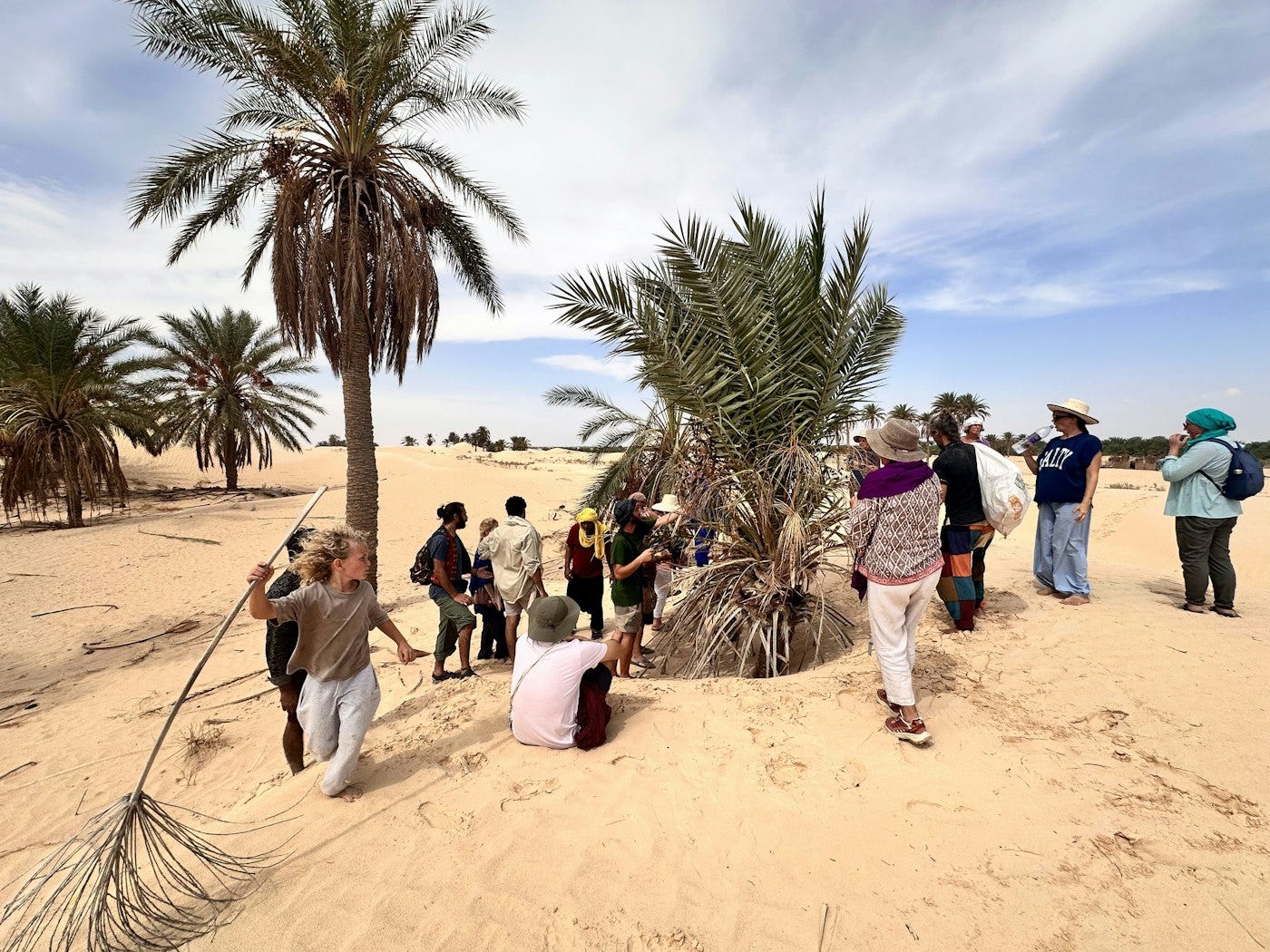
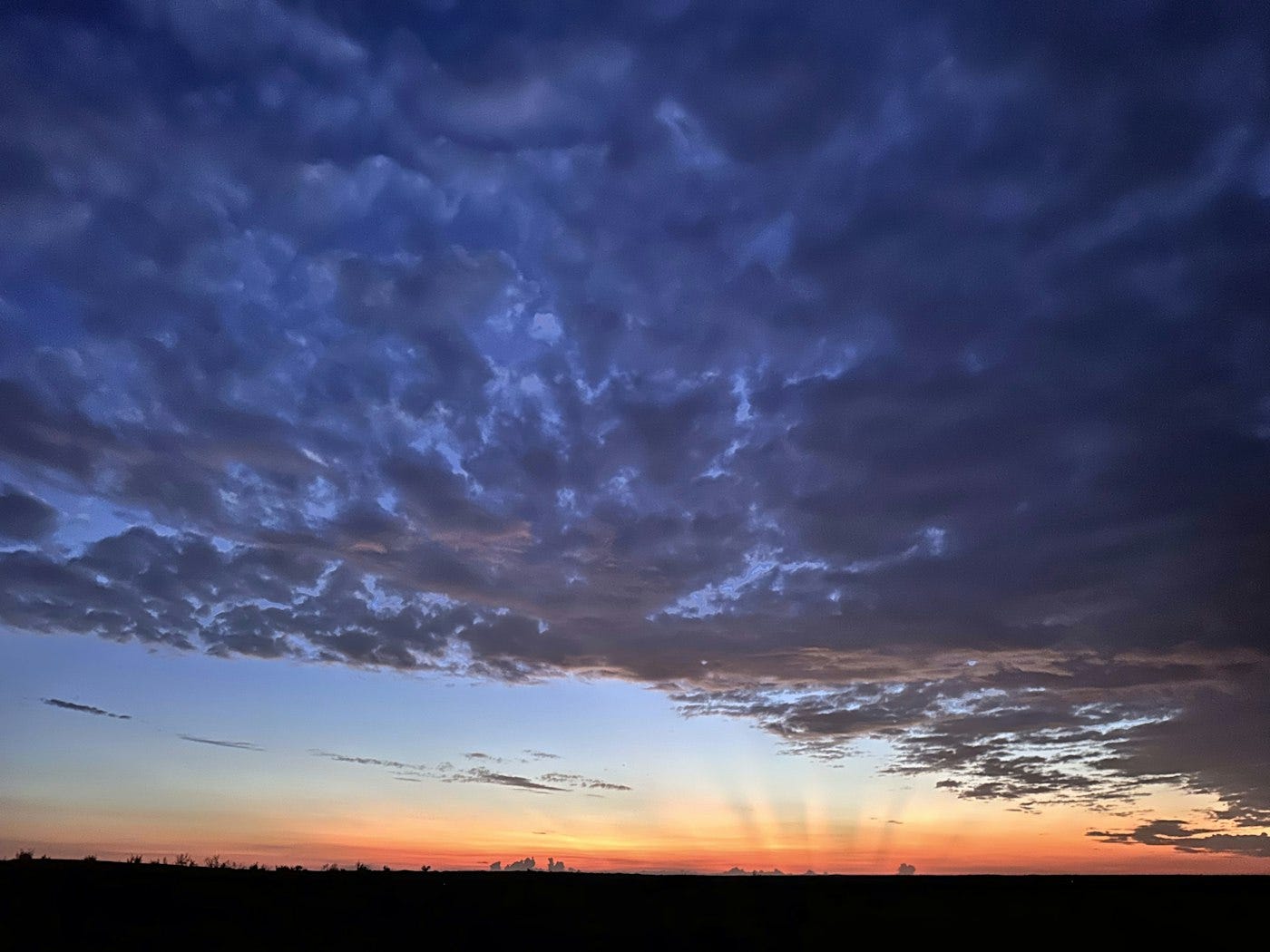
From the mountains, we descended to Sabriya, at the gate of the great Sahara. We walked barefoot on the dunes alongside dromedaries and watched an incredible equinox sunset and sunrise. For two nights, we slept on the shores of the great sand sea.
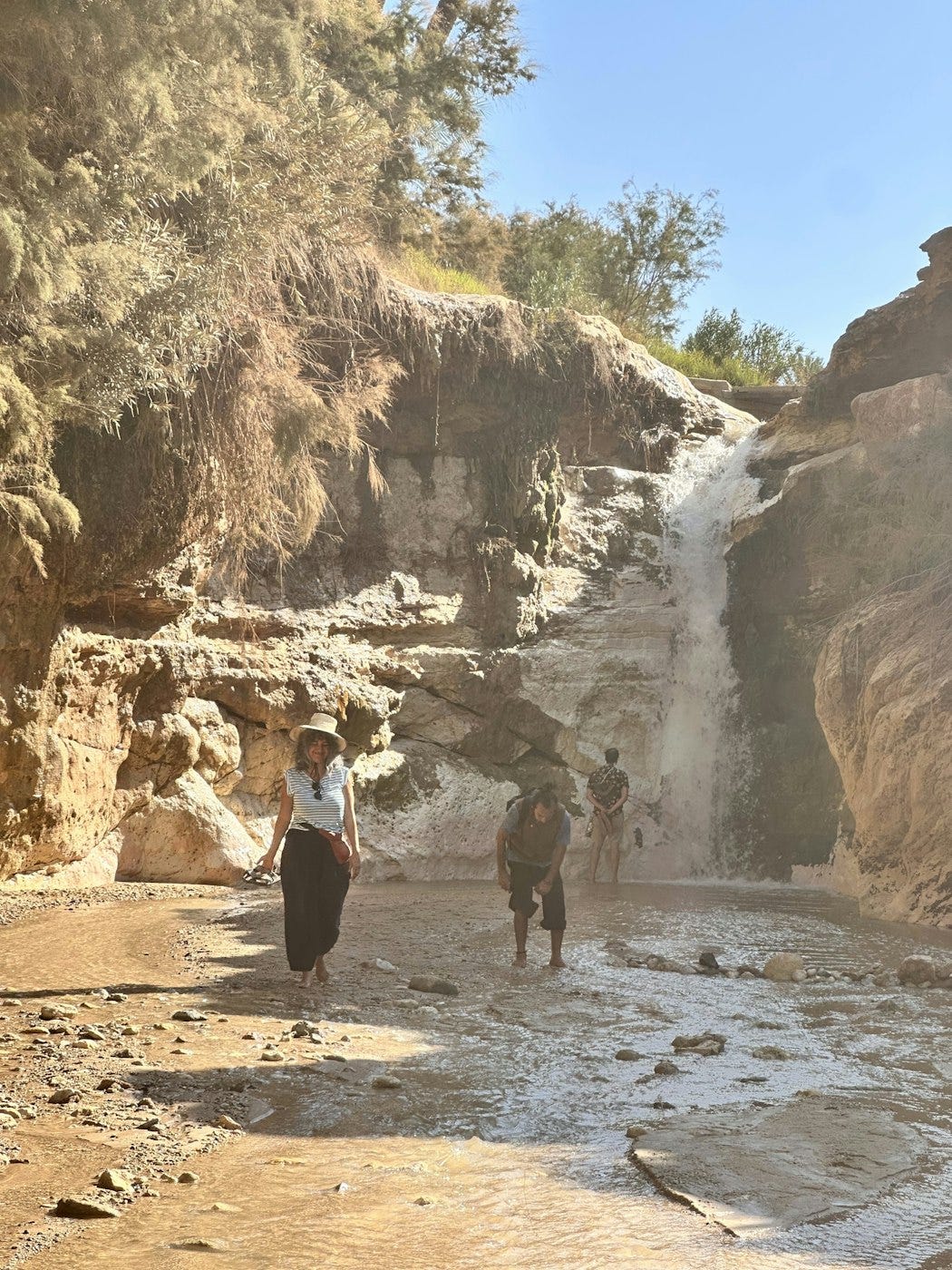
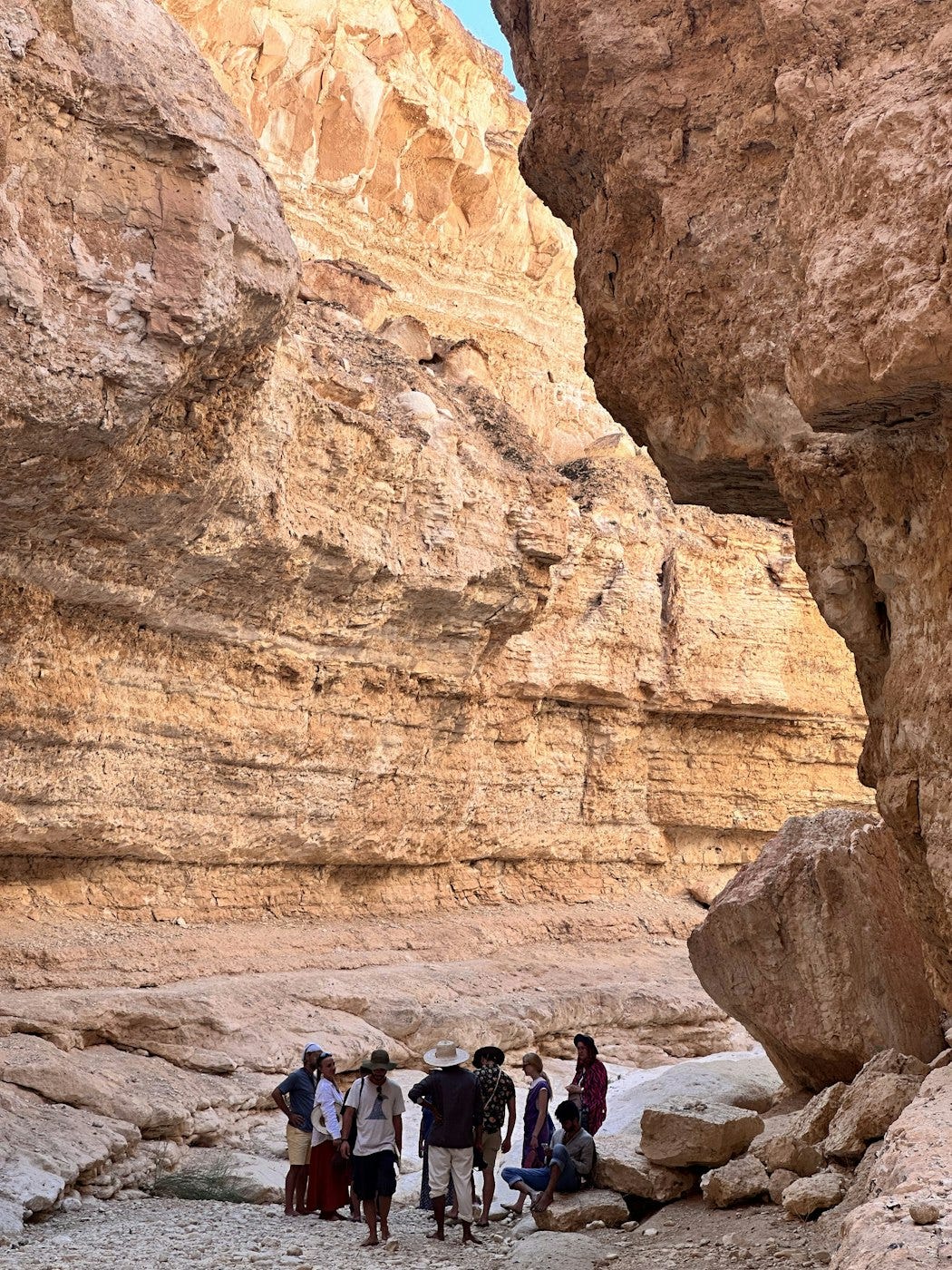
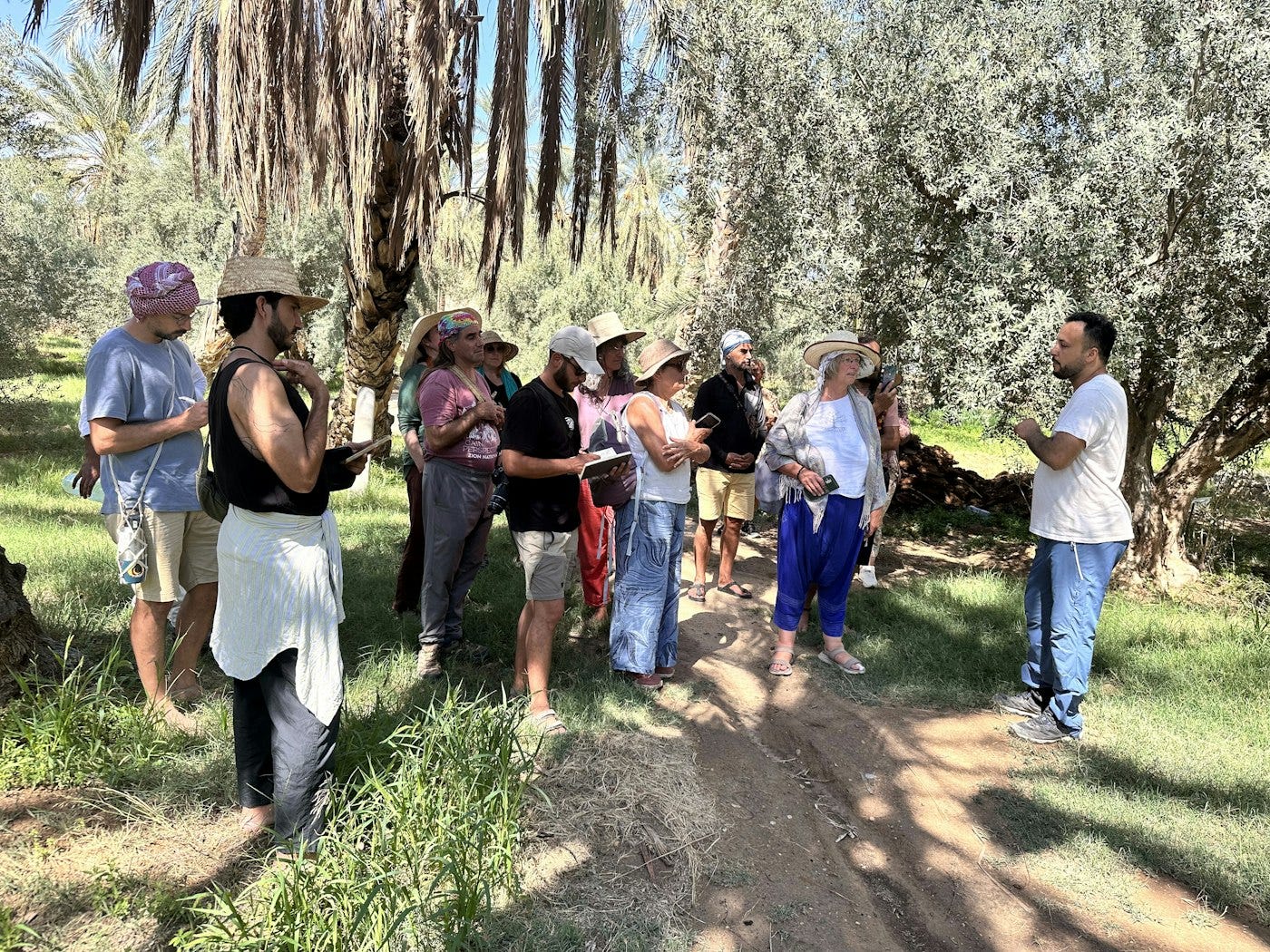
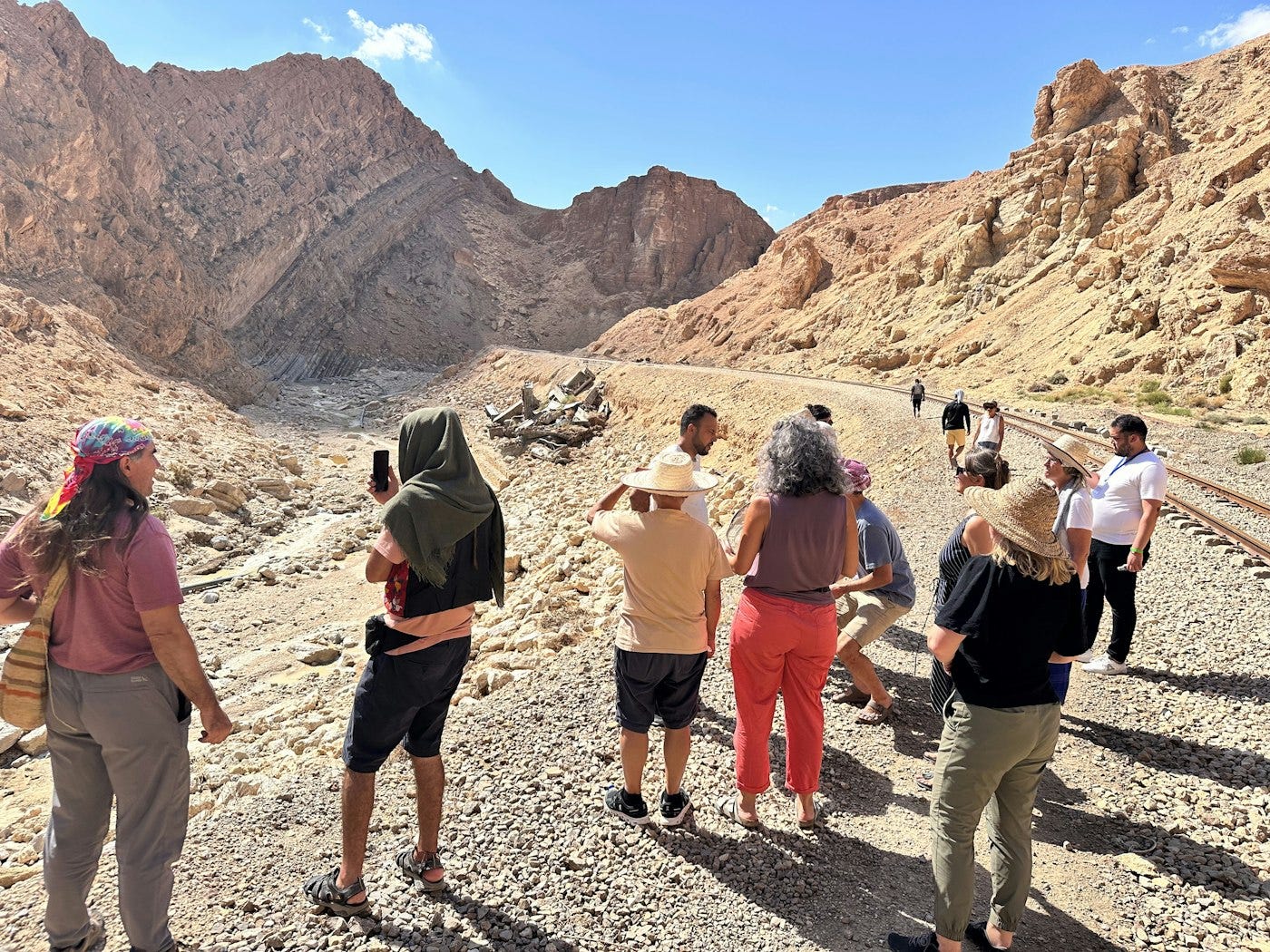
Our journey continued to Tozeur, where we entered the Saharan Atlas to explore the oases of Tamaghza and Chebika. These were living libraries. Layered food forests, waterfalls emerging from canyon walls, abandoned villages built into cliff-sides, each oasis told a story of water, resilience, and the deep intelligence of place. We walked through millions of years of Earth’s history, carved by water, and felt the weight of what it means to belong.
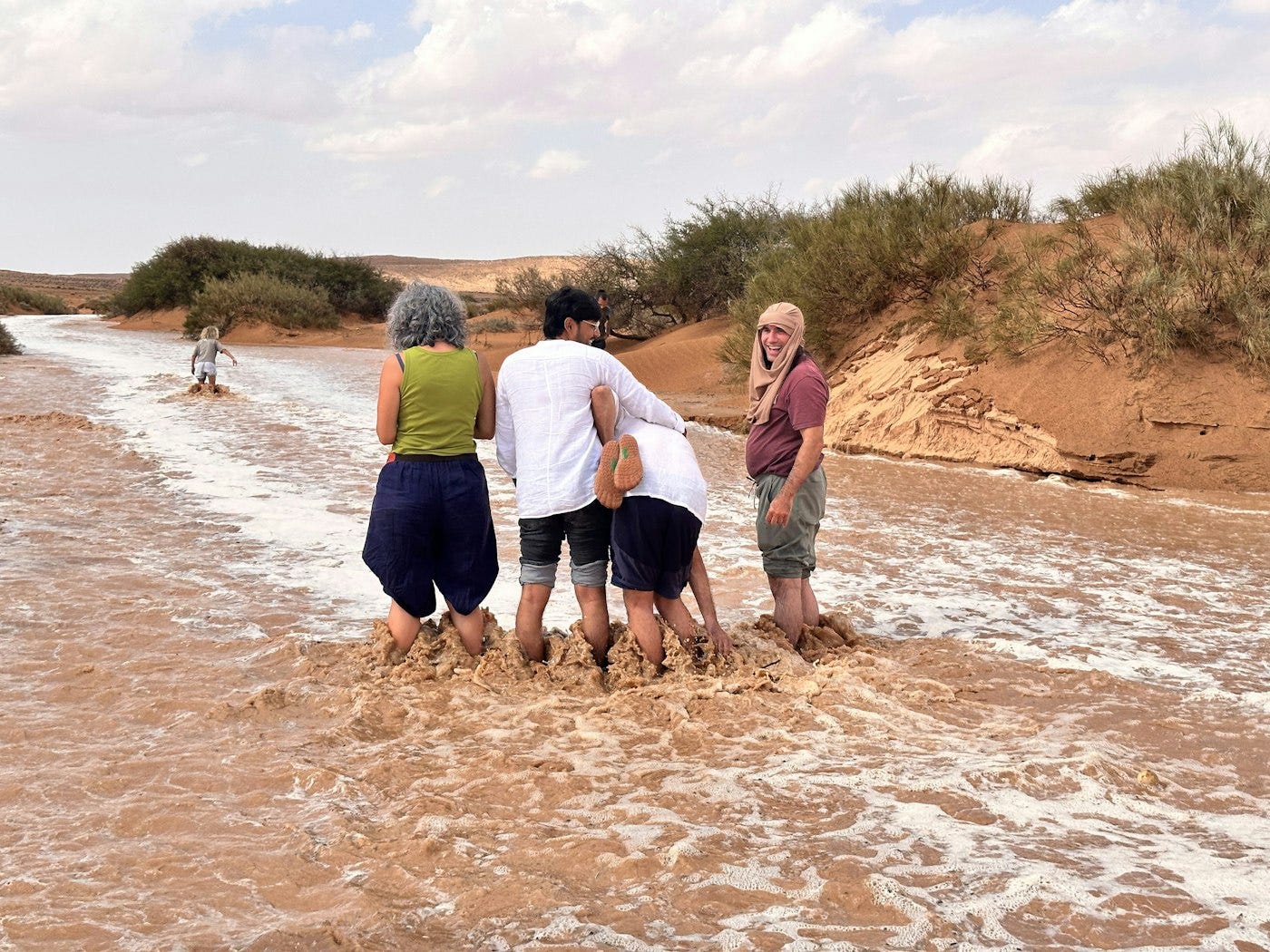
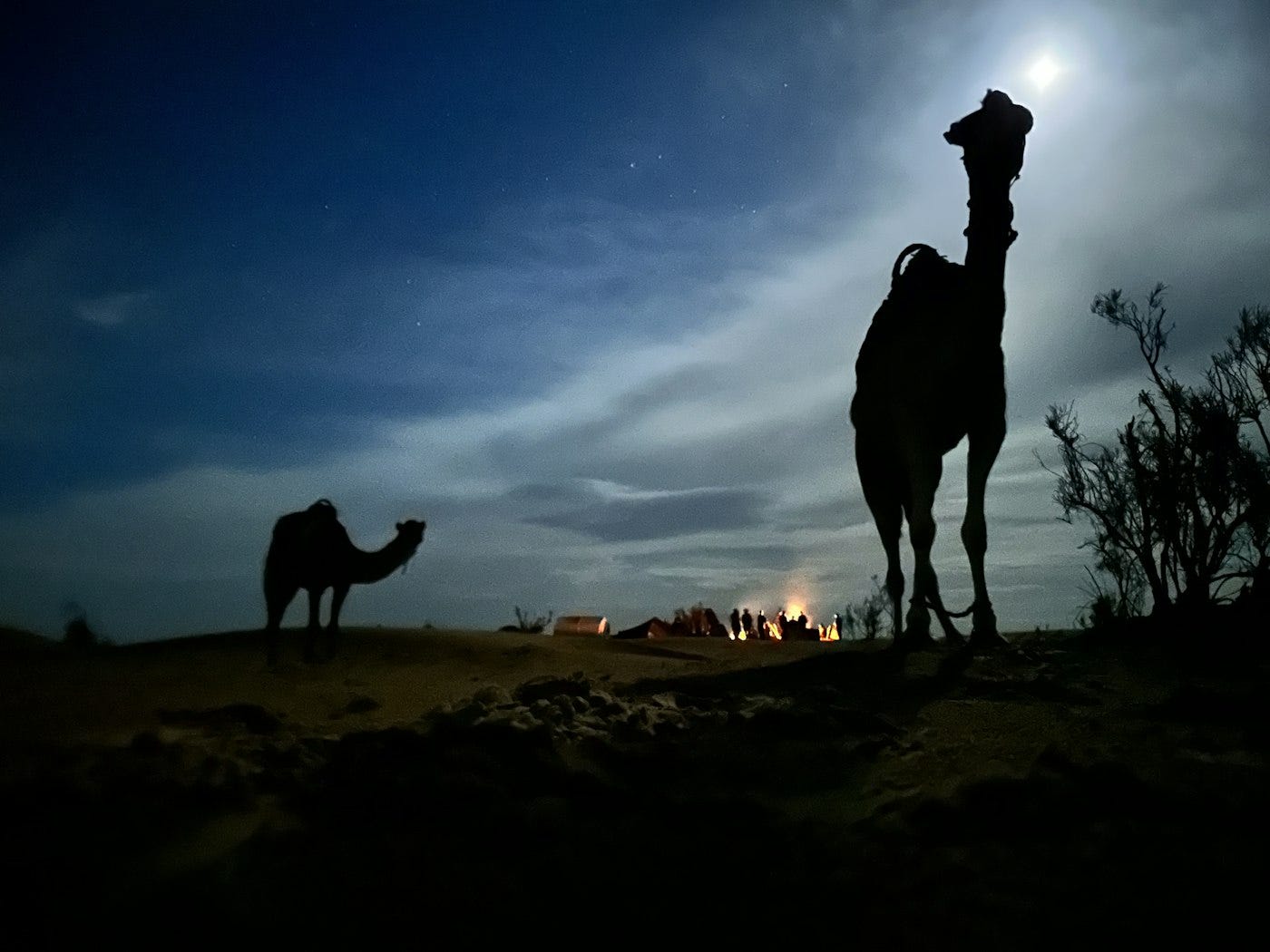
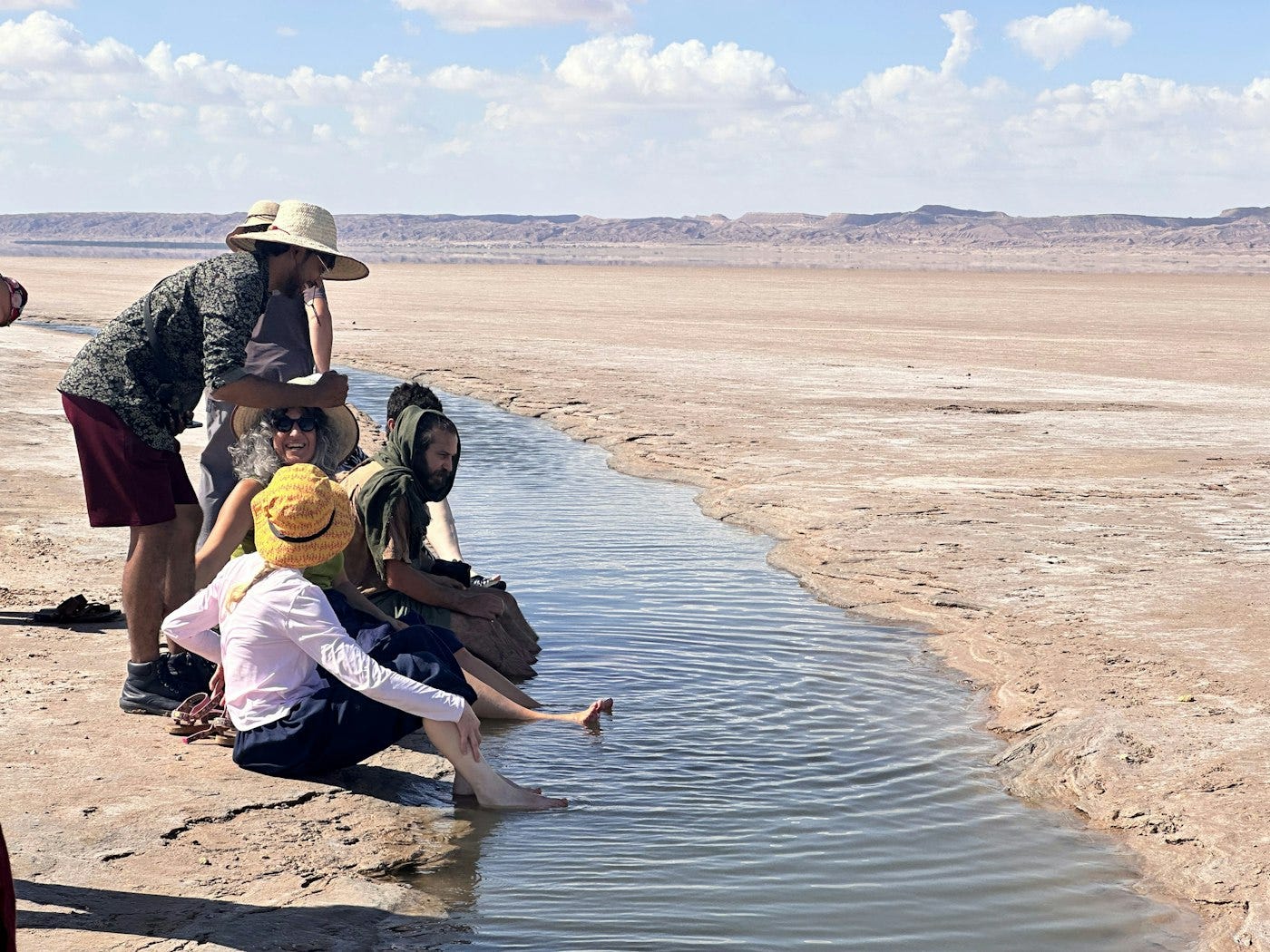
The journey felt smooth, held by the group’s positive energy and, as many of us felt, a protective dome of blessings. The universe seemed to be conspiring with us, letting us witness so much in so little time: lightning over distant storms, a Sahara river waking, gentle rain on our skin, wind lifting sand from the dune tops, a spectacular full moon, and summer heat that reminded us how hard the desert can be, and how precious water truly is. Gifts that helped us feel the Earth more deeply.
The return to the Mediterranean was slow and deliberate. A night in Mahdia, then two in Enfidha. The sand gave way to salt and sea. The palm trees to the olive trees. The dromedary caravans to small fishing boats.
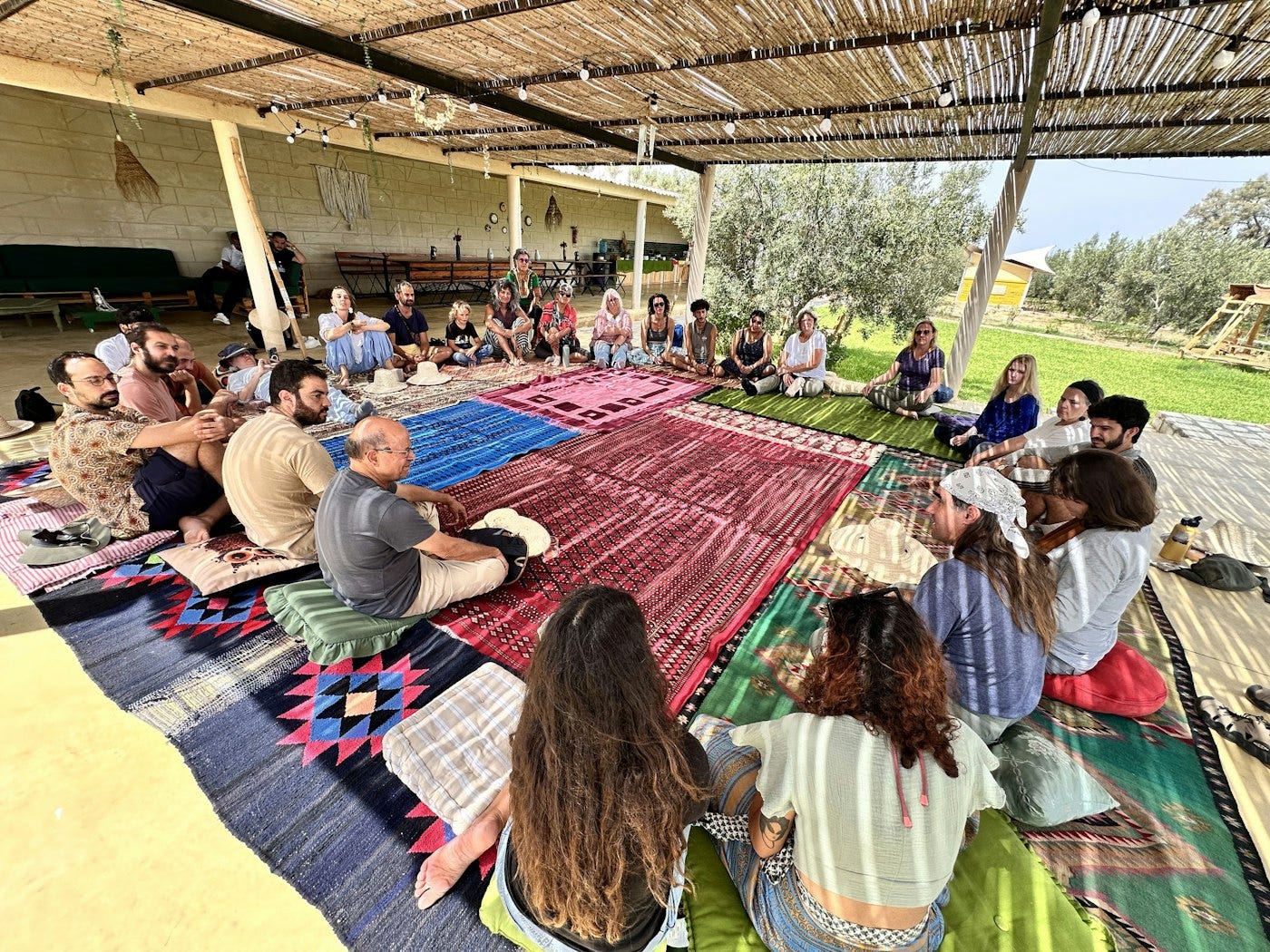
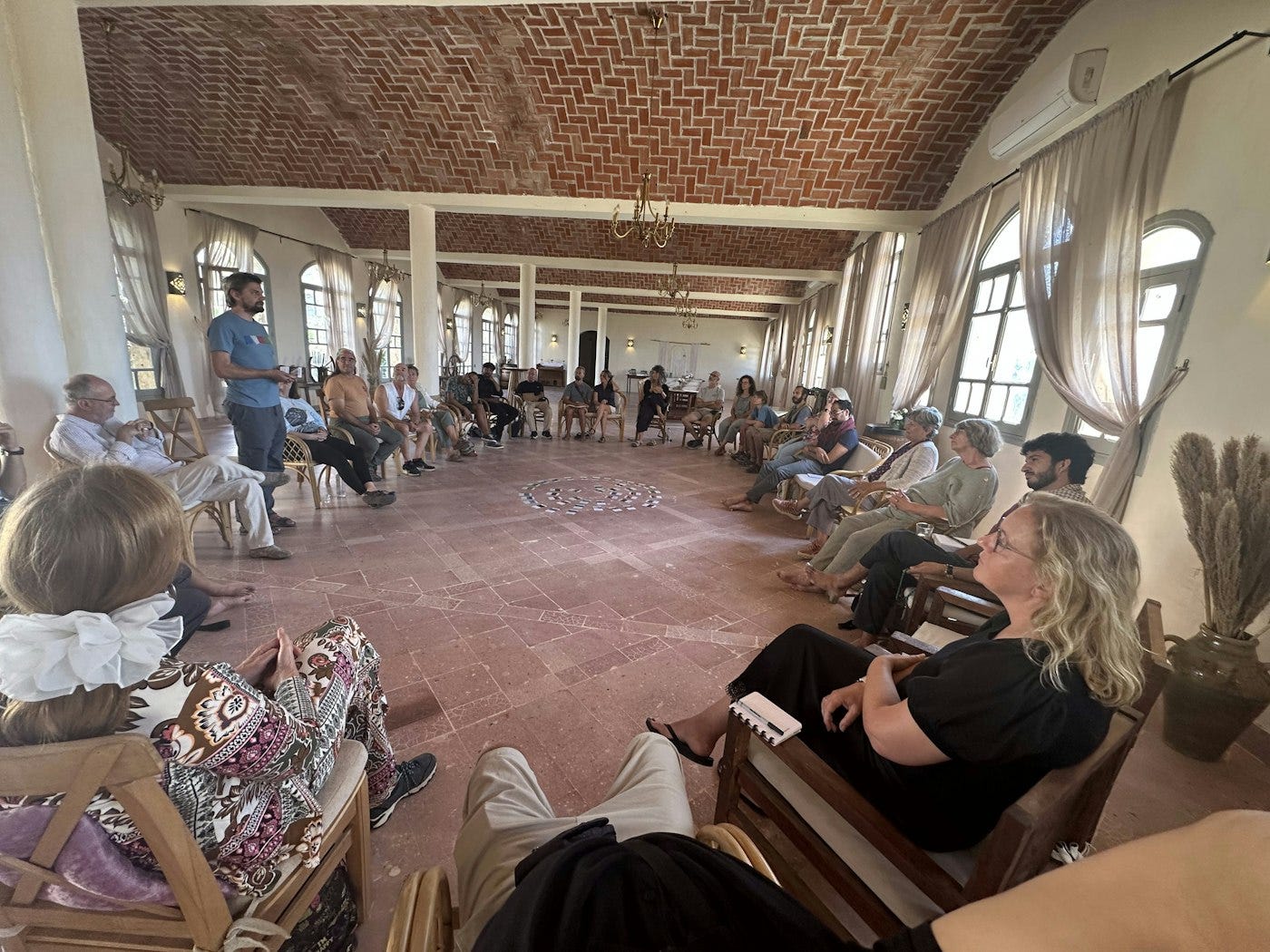
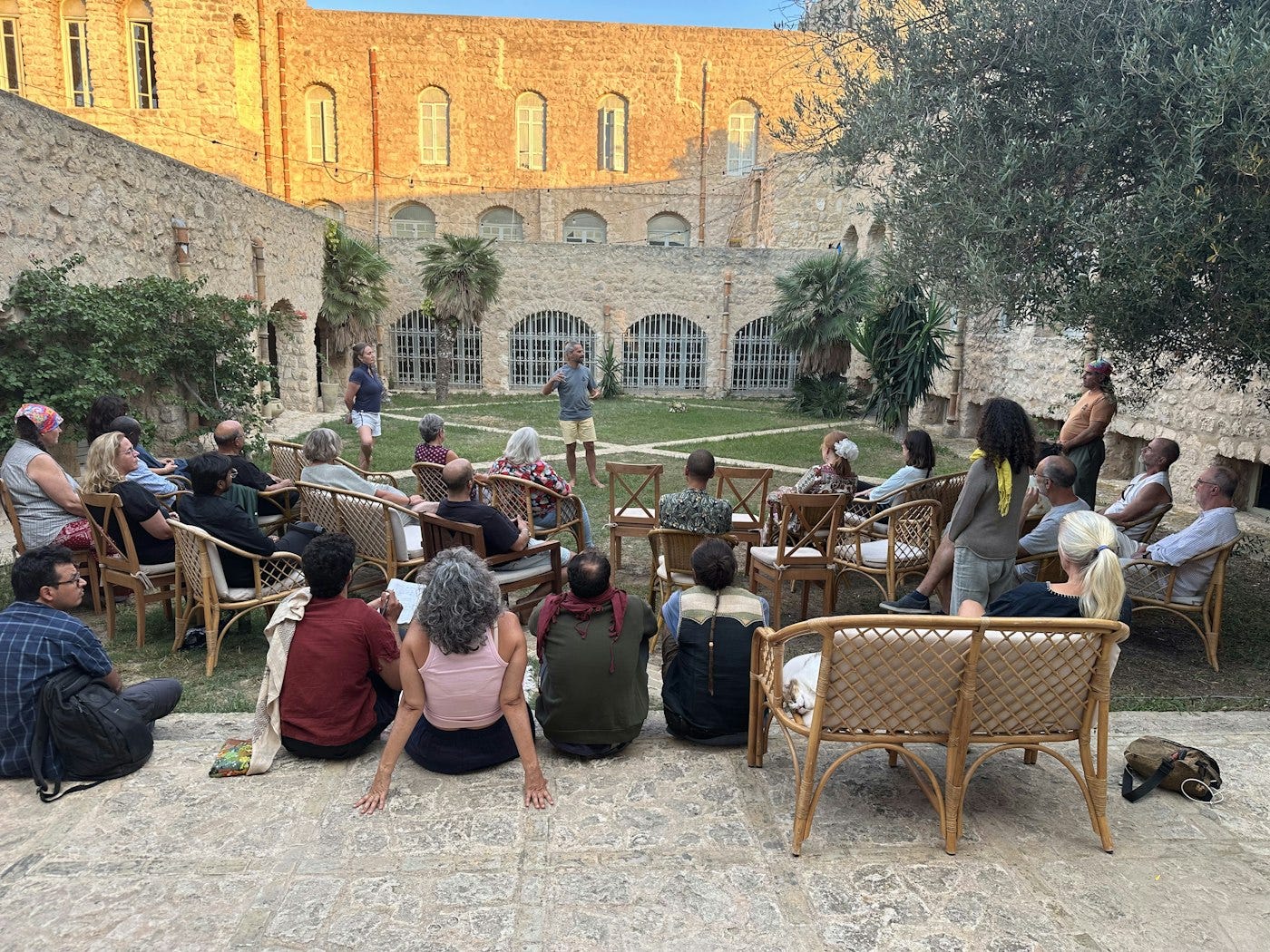
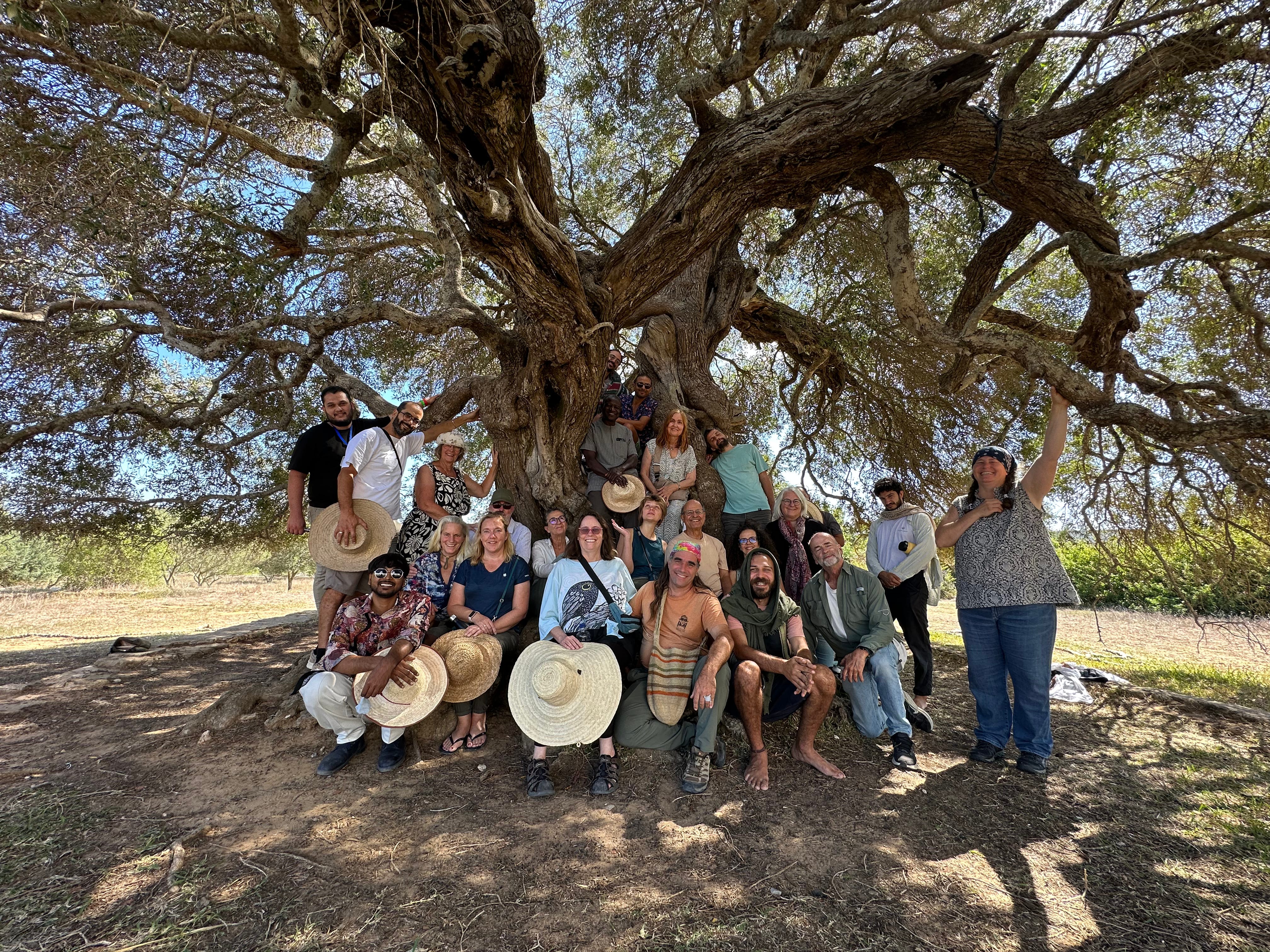
On the 27th, the circle grew. Twelve more joined us near the city of Korba, bringing the total to thirty-two. A beautiful mosaic of bioregional leaders and practitioners, from the eastern Mediterranean, the west, the north, and the south, alongside participants from neighbouring and distant bioregions: the Sahara, the rivers of the North Sea, the Gulf of Guinea, the Great Lakes of Turtle Island, Cascadia, the Himalayas… Each on a journey of regeneration. Their stories were deeply inspiring, and we wove them together around our common ecosystems: Earth and the Mediterranean bioregion.
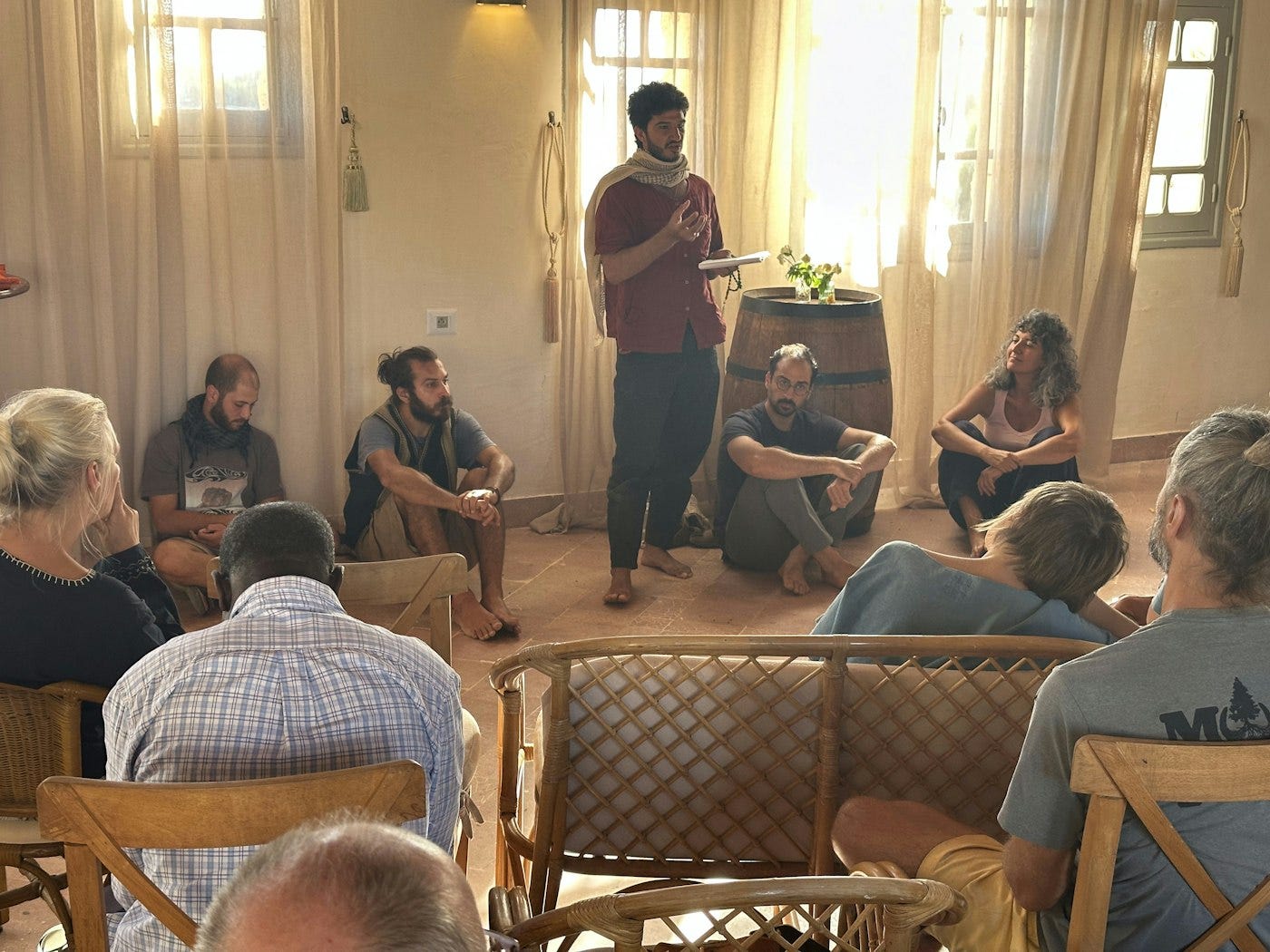
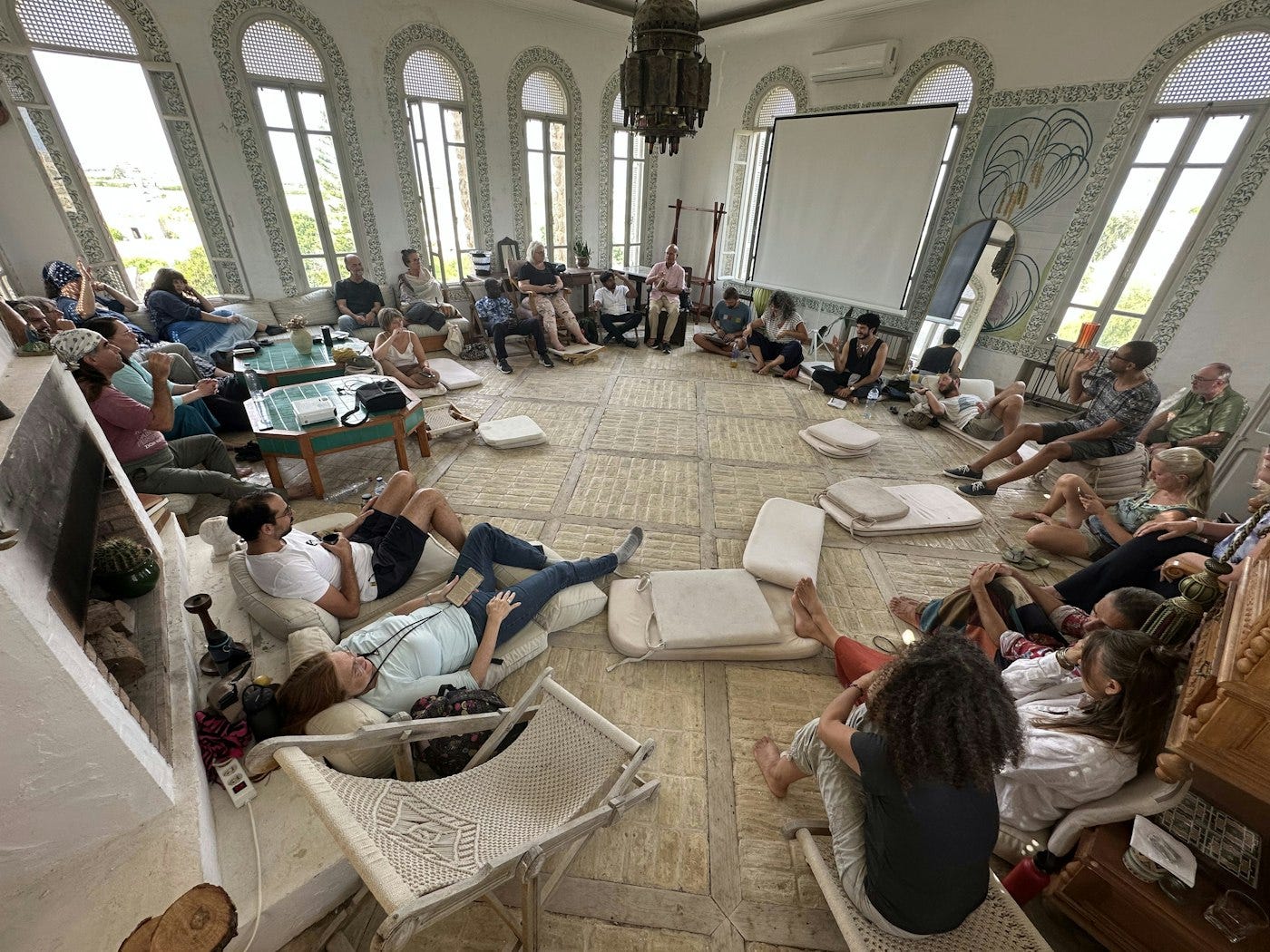
For three days, expertly facilitated by Earth Regenerators, we gathered to give form to the Mediterranean Bioregional Hub. It was not a conference or a lecture. It was a conversation, a collective act of creation. Each participant contributed, weaving their insights, experiences, and hopes into a shared vision.
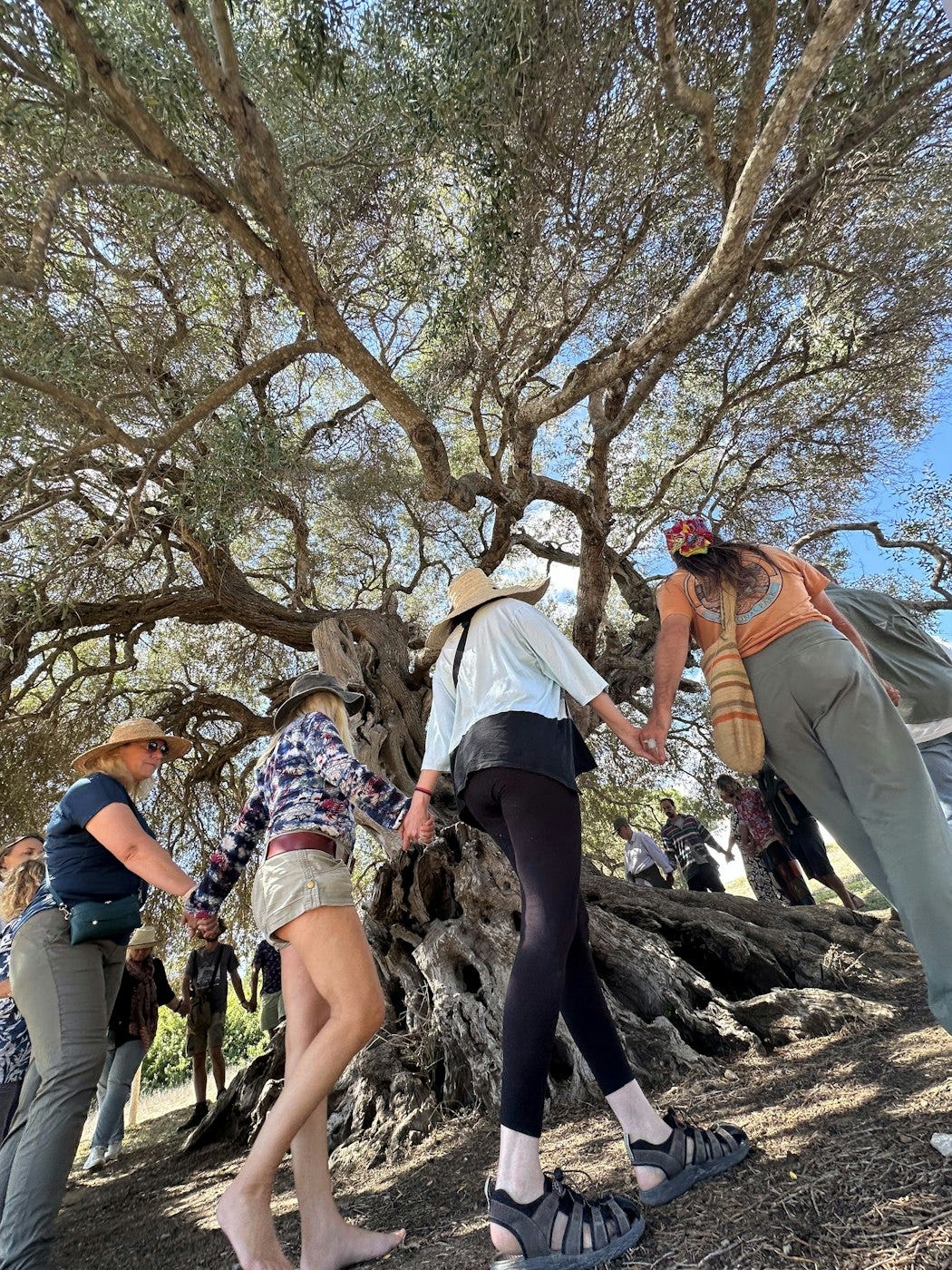
Together, we visited one of the oldest olive trees in the region, one that has witnessed the rise and fall of most Mediterranean empires. We invited her to be our guide, mediator, and mentor in the work of regenerating this place.
We also dreamed about what this work needs to endure. We spoke of mapping in different ways, of more pilgrimages and physical gatherings alongside our online meetings, and of liminal leadership, a way of leading that stays open and humble, comfortable with uncertainty, and making room for others to step forward. These are just some of the seeds we planted, and they will help this initiative grow for generations ahead.
The gathering felt deep and beautiful. Strangers became collaborators. Ideas became commitments. A network began to take shape. What made it even more meaningful is the context: we are doing this through the collapse of global social, political, and ecological systems. That collapse is also what brought us together, our shared concerns, our urgent call to learn what the next steps might be, and to collectively envision a regenerative future.
It truly felt like an island of coherence in a sea of chaos. Native seeds germinating in the cracks of a dying culture of extraction and domination.
There was deep resonance among the group, hearts open to one another. Friendship and kinship grew as we explored together what it means to belong to Earth and to the Mediterranean as common kin and ancestor.
It was a great honour to co-host and be part of such an inspiring gathering, and to explore together how to organize at the scale of the Mediterranean bioregion and how to draw on our deep love and care for this place.
The Mediterranean Bioregional Hub is not an institution. It is a living web, a community of practice, a commitment to regenerate this vital ecosystem and the rooted cultures that have emerged within it. It was born from the simple act of walking together, of listening together, of being present to the land and to one another.
This is the second in a series, a vital thread in reweaving the web of belonging. Each pilgrimage deepens the work. Each gathering strengthens the network. Each step reminds us that regeneration is not something we do to the world; it is something we do with the world, together.
The pilgrimage continues.
All pictures are taken by me.
Huge thanks to all participants and special thanks to Earth Regenerators and Penny Heiple for their trust and their guidance.